


 Published: 17:47, November 13, 2026
meat production in Russia in 2026: overall decline and regional contrasts
Over the first three quarters of 2026, Russian poultry farming showed a decline in physical output after reaching a multi-year high in 2025. Unlike the beef market, where the downturn is driven by a contraction in household plots, in the poultry sector the overall trend is determined by agricultural organizations and lower production in the Central and Southern regions. This was reported to Agroexpert by Oksana Mikheeva, CEO of the EMEAT and FEEDLOT information and analytics group.
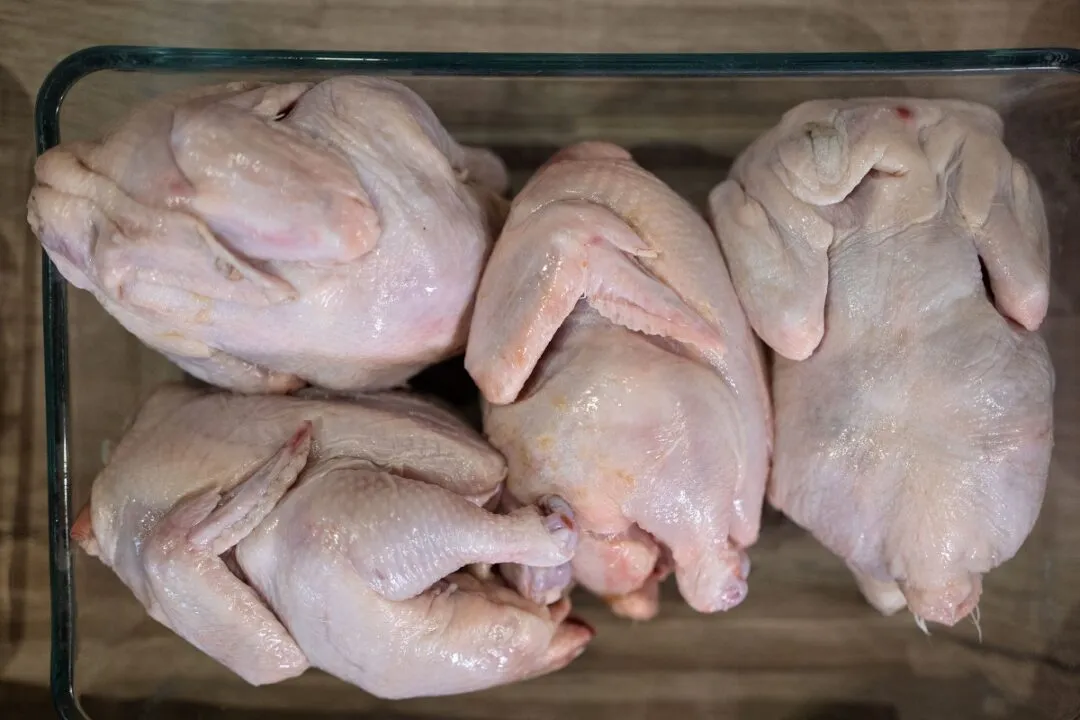
Key indicators (January–September 2026 compared with the previous year):
Total meat production of poultry (carcass weight): 3.782 million tonnes (-3.7%).
Production structure: correction after the 2025 peak
poultry farming, along with pig farming, remains one of the most industrialized sectors of Russian livestock production: agricultural organizations account for 95.1% of total output. At the same time, January–September saw declines in all farm categories:
agricultural organizations: 3.598 million tonnes (-3.6% year on year),
households (private plots): 151.2 thousand tonnes (-6.3%, share of total output — 4%),
peasant farms and individual entrepreneurs (KFH): 32.4 thousand tonnes (-7.2%, share of total output — 0.9%).
Conclusion: agricultural organizations account for 95.1% of output, and they also accounted for about 91% of the total production decline over nine months.
The reduction in output at agricultural organizations over the first three quarters of 2026 is a correction from a high base: from 2022 to 2025, output in agricultural organizations grew continuously over nine months (from 3.534 million tonnes to 3.732 million tonnes), and the current 2026 figure (3.598 million tonnes) exceeds the levels of 2022–2023. At the same time, the household-plot segment has been shrinking steadily — from 172 thousand tonnes in 2022 to 151.2 thousand tonnes in 2026.
Regional shifts: decline in the Center and the South
More than 61% of Russia’s poultry meat is produced in two federal districts — the Central District (share 36.7%) and the Volga District (24.7%). At the same time, output in the Central Federal District fell noticeably over the year, while in the Volga Federal District it remained almost unchanged.
The negative result is concentrated in three districts:
The Central Federal District remains the largest producer (1.388 million tonnes across all categories), but over nine months it cut output by 5.6% (-82 thousand tonnes), including 80.1 thousand tonnes in agricultural organizations.
The Southern Federal District reduced production by 12.3% (-43.8 thousand tonnes), of which the industrial sector lost 34.9 thousand tonnes.
The North Caucasus Federal District posted the steepest relative decline — by 14.3% (-42.8 thousand tonnes). At the same time, output in the district’s agricultural organizations fell by 44.2 thousand tonnes.
Growth and stability points: the Volga region, Siberia, the Urals and the Northwest
Against the backdrop of lower production in the Central and southern districts, the Volga region kept volumes almost at last year’s level, while growth was recorded in Siberia, the Urals and the Northwest.
The Volga Federal District is holding volumes almost at last year’s level: 935.2 thousand tonnes across all categories (-0.3%), while in the industrial sector output remained almost unchanged — 907 thousand tonnes (-0.4 thousand tonnes).
The Siberian Federal District became the main growth driver in the country, adding 5% across all categories (+14.1 thousand tonnes). The entire increase came from agricultural organizations (+14.3 thousand tonnes).
Positive dynamics were also recorded in the Urals Federal District (+1.8%), the Northwestern Federal District (+1.6%) and the Far Eastern Federal District (+2.2%).
Summary
The decline in poultry meat production in January–September was concentrated in the Central, Southern and North Caucasus federal districts. Growth in the Siberian, Urals, Northwestern and Far Eastern districts, as well as almost unchanged output in the Volga Federal District, partially offset the decline, but did not change the overall trend: production in the country fell by 3.7%. Agricultural organizations made the main contribution to the decline: with a share of 95.1% in total output, they accounted for about 91% of the reduction.
 19:10, November 13, 2026
 17:11, November 13, 2026
 15:45, November 13, 2026
Popular
Нет просмотренных постов.