


 Published: 10:02, November 26, 2026
Lamb market: production declines along with herds
Production of lamb and goat meat in Russia in January–September 2026 fell by 3.9%, to 93.8 thousand tonnes in carcass weight. herds of sheep and goats as of October 1 decreased by 6.6% year on year, to 18.1 million head, according to a review by the EMEAT analytics agency. The main risk to supply is the shrinking herd in small farms, which account for most of output.
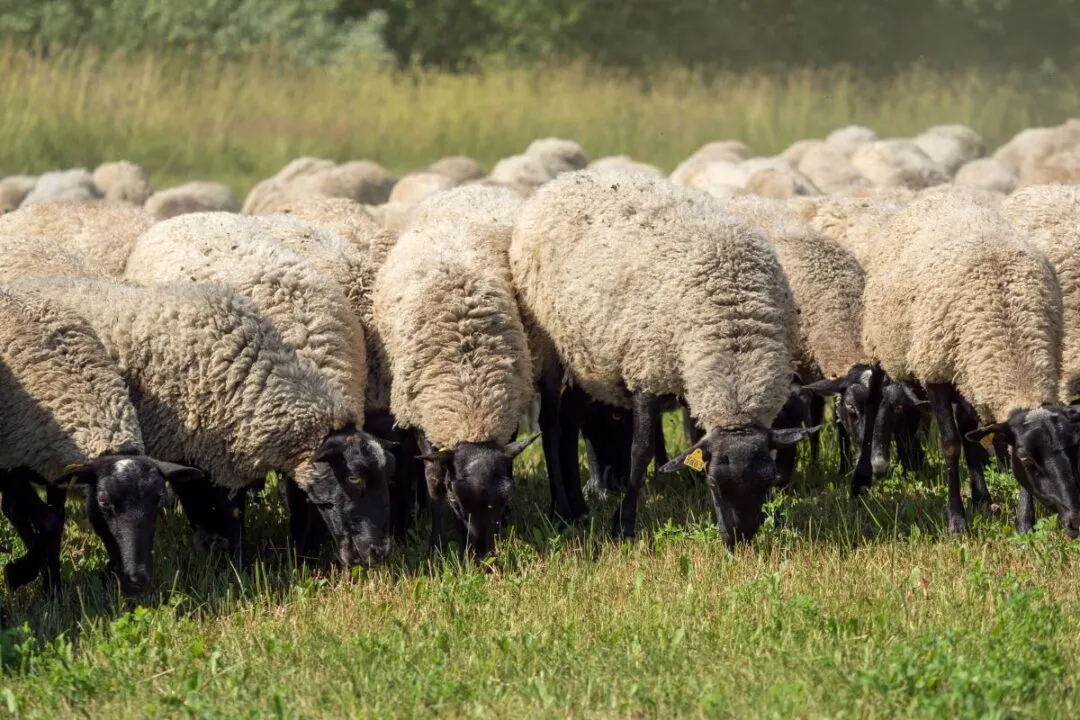
Over nine months, production declined in all farm categories. The sharpest drop was recorded in household farms, while agricultural enterprises almost maintained last year’s volume.
| Категория хозяйств | Производство, тыс. тонн в убойном весе | Изменение за год |
|---|---|---|
| Хозяйства населения | 54,6 | −4,8% |
| Крестьянские фермерские хозяйства | 30,6 | −3,1% |
| Сельхозорганизации | 8,6 | −0,6% |
| Всего | 93,8 | −3,9% |
Based on rounded EMEAT figures, the total decline amounted to about 3.8 thousand tonnes. About 2.8 thousand tonnes of this reduction came from household farms.
Supply depends on small producers
Household farms account for about 58% of lamb and goat meat production, farmers for roughly a third. Together, they make up about 91% of output. The share of agricultural enterprises is only 9.2%, EMEAT analysts note.
This structure limits the ability to quickly offset the decline in production at private household plots. Even stable output at agricultural enterprises has so far not changed the market’s overall trend.
According to the Agroanalytics Center, sheep farming is harder to scale than poultry farming and pig farming. The production cycle is longer: lambs are usually sent for slaughter at five to nine months of age. In addition, the sector is geared to relatively narrow demand: in a review published in May, the center estimated lamb consumption at about 1.4 kg per person per year, or 1.7% of total meat consumption.
The North Caucasus retains a key role
The North Caucasus Federal District remains the largest production center. According to EMEAT, it produced 32.7 thousand tonnes of lamb and goat meat in carcass weight over nine months — 1.8% less than a year earlier. The district accounts for about 35% of the national total.
Dagestan remains one of the main sheep-breeding regions. According to the republic’s Agriculture Ministry dated September 17, the number of sheep and goats in the region after the spring lambing campaign exceeded 5 million head, compared with 4.6 million at the start of the year. This is a seasonal change that cannot be directly compared with the annual decline in livestock numbers across Russia.
The republic has 43 breeding enterprises, keeping more than 178.3 thousand head of breeding small ruminants. Regional authorities cite the development of processing, slaughter and storage infrastructure, improved pasture management and producer cooperation among their priorities.
External demand creates opportunities for suppliers
Uzbekistan remains one of the available export destinations. According to the country’s National Statistics Committee, in January–July 2026 the country imported 18.9 thousand tonnes of lamb worth 43.8 million dollars. Purchase volumes rose by 37.7% year on year.
Russia supplied 635.7 tonnes — about 3.4% of Uzbek imports. Kazakhstan was the main supplier with 16.9 thousand tonnes, while Mongolia shipped 891.3 tonnes. Thus, the growing market is still being supplied mainly by competitors of Russian producers.
In 2025–2026, Russia gained access to Jordan for shipments of meat and offal from small ruminants. However, opening a market does not in itself mean that shipments have begun or increased.
For the Russian market, the main constraint remains the raw material base. The shrinking herd creates a risk of further supply declines, but by itself it does not yet prove an inevitable price spike: price dynamics will also depend on effective demand, foreign trade and producers’ costs. Strengthening the breeding base and stable sales channels will allow farms to plan herd reproduction more confidently.
 17:50, November 26, 2026
 17:26, November 26, 2026
 17:11, November 26, 2026

Popular
Нет просмотренных постов.