


 Published: 14:08, November 24, 2026
Budget adopted: the AIC will receive 1 trillion rubles over 3 years
The State Duma adopted bill «On the Federal Budget for 2027 and the Planning Period of 2028-2029». Russia’s agro-industrial complex will receive about 1.3 trillion rubles over the next three years.
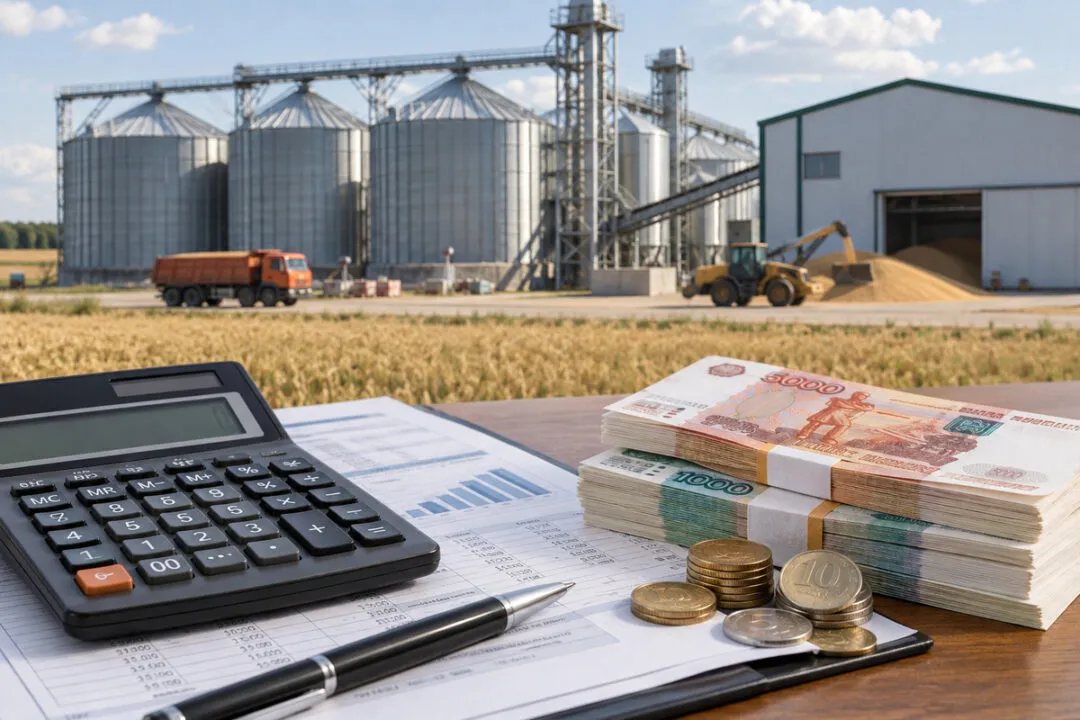
The budget deficit is planned at about 5 trillion rubles annually.
Funding for the main state program «Development of Agriculture» is planned in 2027 at 261.744 billion rubles (402.179 billion rubles in 2026, a decrease of 35%), in 2028 — 304.564 billion rubles and in 2029 — 306.054 billion rubles, according to the explanatory note to the document.
From 2026 to 2029, there is no funding at all for the domestic aviation drone project.
Additional appropriations are provided under the section «Agriculture and Fisheries,» with disbursement depending on the receipt of corresponding federal budget revenues. In 2027 — 51.1 billion rubles, in 2028 — 45.5 billion rubles, in 2029 — up to 27.9 billion rubles.
In particular, in 2027 up to 23.76 billion rubles may be allocated to support agriculture; another up to 11.78 billion rubles — from revenues from export duties on peas, chickpeas, lentils, sunflower oil and meal, and oilseed flax. Another up to 11.5 billion rubles is earmarked to support agriculture and fisheries from fees for concluding new agreements on the use of fishing grounds.
Separately, the draft includes up to 3.87 billion rubles to support agriculture and fisheries from revenues from auctions for crab quotas and 158.6 million rubles for activities under the national project «International Cooperation and Export.»
Thus, 261.7 billion rubles is the base funding for the federal state program for agricultural development in 2027, while the additional reserves provided for in the draft budget could increase support for the agricultural and fisheries complex by another roughly 51 billion rubles if the conditions for their allocation are met.
| Госпрограмма | 2026, млрд руб. | 2027, млрд руб. | Изменение, млрд руб. | Изменение, % |
|---|---|---|---|---|
| Развитие сельского хозяйства | 402,179 | 261,744 | -140,4 | -34,9% |
| Комплексное развитие сельских территорий | 94,811 | 65,268 | −29,5 | −31,2% |
| Развитие рыбохозяйственного комплекса | 21,953 | 18,729 | −1,8 | −8,8% |
Key funding parameters:
Base support: Up to 23.7 billion rubles is allocated for implementing government decisions to support agriculture in 2027, 976.5 million rubles in 2028, and 9.5 billion rubles in 2029.
Investment quotas: Up to 3.8 billion rubles (2027) and 18.2 billion rubles (2028) are planned to support agriculture and fisheries from revenues from auctions for the sale of shares in crab catch quotas.
Export duties: Funds received from export duties on oilseeds and pulses (peas, chickpeas, lentils, sunflower oil) will be reallocated to support the AIC in the amount of from 4.8 billion to 11.7 billion rubles annually.
Fishing grounds: Revenues from fees for concluding new agreements on the use of fishing grounds will provide funding of from 13.3 billion to 18.1 billion rubles per year.
International export: Under the national project «International Cooperation and Export,» up to 158.6 million rubles annually will be directed to support farmers through the indexation of customs fees.
The total amount of funds earmarked in the draft budget for these purposes varies depending on the receipt of targeted revenues and the macroeconomic situation.
Reserves for the AIC in 2027 cut by a third
The draft federal budget for 2027 provides for up to 51.1 billion rubles in reserves to support agriculture and fisheries. This is 25.4 billion rubles, or 33.2% less than the amount of similar reserves provided for 2026 — 76.45 billion rubles.
The main reduction comes from funds from export duties on peas, chickpeas, lentils, sunflower oil, meal and oilseed flax. In 2026, up to 36.3 billion rubles was provided for this area, whereas in the draft for 2027 it is 11.78 billion rubles, a decrease of 67.6%.
These are only reserved funds from specific budget revenue sources. The main expenditures on the agro-industrial complex are distributed through state programs and budget appendices.
 17:26, November 24, 2026
 16:54, November 24, 2026
 15:32, November 24, 2026
 15:24, November 24, 2026
Popular
Нет просмотренных постов.