


 Published: 12:22, November 25, 2026
Wheat continued to rise in price in the Center and the Volga region
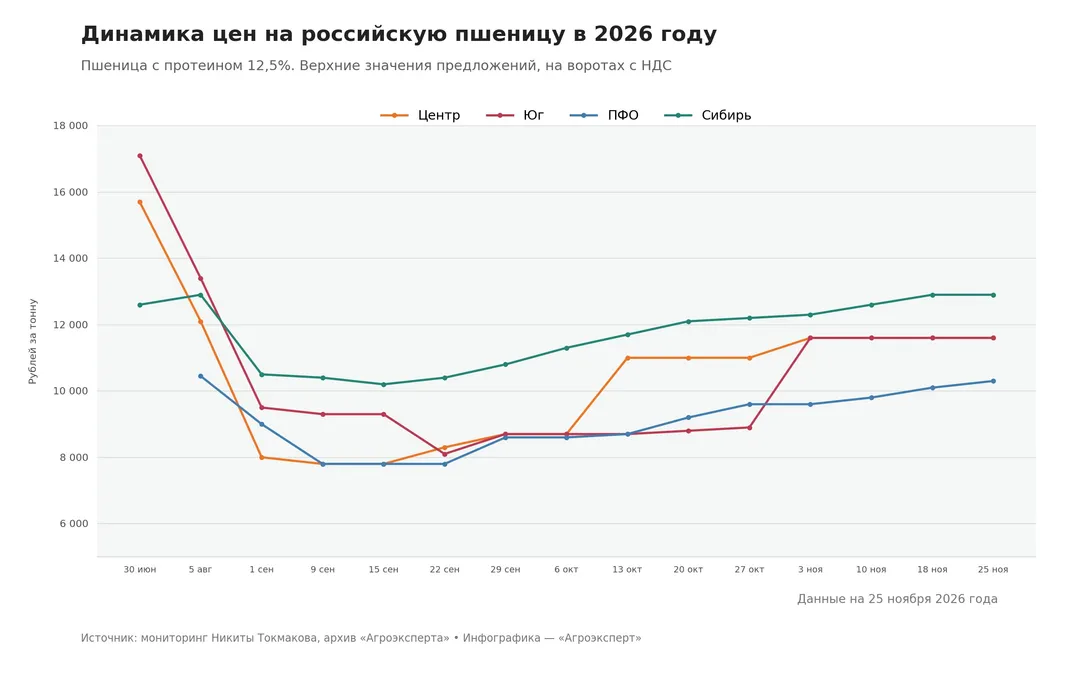
Wheat prices with protein 12.5% rose over the week in Central Russia by 300 rubles per ton, in the Volga region by 200 rubles. In the South and Siberia, prices were unchanged, according to monitoring by farmer and expert Nikita Tokmakov on November 25. All prices are given ex farm, including VAT. Wheat prices have been rising since October after falling nearly 2 times from the end of June.
In the Center, the main wheat price range was 9.6–11.1 thousand rubles per ton, with some offers reaching 11.6 thousand rubles. In the Volga region, prices rose to 8.8–10.3 thousand rubles.
In the South, the main range remained at 7.7–9.2 thousand rubles per ton, with some offers reaching 11.6 thousand rubles. In Siberia, prices stayed within 11.4–12.9 thousand rubles.
According to Nikita Tokmakov, in the Center ordinary purchase prices have almost matched intervention prices. In the South, state purchases have so far had little effect on grain prices because of the surplus. In Siberia, prices may have reached their peak.
Corn is putting pressure on feed grain, which, according to the monitoring data, last week became cheaper than feed by 1–1.5 thousand rubles per ton.
Barley is getting more expensive in three regions
Barley prices in the Center rose by 300 rubles over the week, to 8.2–9.7 thousand rubles per ton; in the South, also by 300 rubles, to 7.5–9 thousand rubles. In the Volga region, the increase was 500 rubles, with the range reaching 8–9.5 thousand rubles. In Siberia, prices remained at 12.1–13.6 thousand rubles.
The market is being supported by exports via the Caspian Sea and overland shipments to China, as well as demand from livestock producers. However, the impact of domestic demand may weaken amid the grain surplus, the expert believes.
GOST-grade corn in the Center fell by 400 rubles, to 9.5–11 thousand rubles per ton. In the South, prices rose by 100 rubles, to 8.5–10 thousand rubles. The monitoring notes that the ranges now reflect only the cost of GOST-compliant product: fewer and fewer enterprises are accepting wet corn.
At the start of the week, according to the data cited in the review, corn had been harvested from 75% hectares in Russia, with 13.6 million tons threshed — 16% more than a year earlier. Average yield was 71 centners per hectare versus 65 centners per hectare.
Sunflower gained
Sunflower in the Center rose by 1 thousand rubles, to 26–27.5 thousand rubles per ton. In the Volga region, prices increased by 500 rubles, to 25.2–26.7 thousand rubles. In the South, the main range was 18–23.9 thousand rubles, with some offers reaching 25.4 thousand rubles; the weekly increase was 500 rubles. In Siberia, prices remained at 28–29.5 thousand rubles.
The expert explains the wide spread in southern prices by difficulties selling the product in the new regions. At the same time, for quality lots in the Central Black Earth region, ex-farm prices for some buyers are already reaching 28–29 thousand rubles per ton.
According to the review, sunflower has been harvested from 99% hectares, with the crop reaching 20.8 million tons — 26% more than last year. At the same time, processors’ ability to buy raw material is limited by difficulties exporting oil and meal, Tokmakov notes.
Soybean price continues to rise
Soybeans with protein content of 39–40% on a dry-matter basis in the Center rose by 700 rubles, to 36–38.5 thousand rubles per ton. In the South, the increase was 200 rubles, to 32.7–35.2 thousand rubles. In the Far East, prices rose by 1 thousand rubles, to 37.5–41 thousand rubles.
According to the monitoring, by the start of the week soybeans had been harvested from 97% hectares. About 8 million tons were threshed — 1 million tons, or 11%, less than a year earlier.
Rapeseed in the Center added 700 rubles, to 30.4–31.9 thousand rubles per ton; in the South, 200 rubles, to 27.3–28.8 thousand rubles. In Siberia, prices rose by 500 rubles, to 27.4–28.9 thousand rubles. In the Volga region, the range was unchanged at 27.5–29 thousand rubles.
China remains the main foreign market for Russian rapeseed oil and meal, where processors face strong competition, the expert notes. At the same time, winter rapeseed acreage has increased in Russia, and spring rapeseed plantings are expected to expand.
 17:01, November 25, 2026
 16:38, November 25, 2026
 16:17, November 25, 2026
 15:03, November 25, 2026
Popular
Нет просмотренных постов.